

The human body is an intricate biological machine composed of trillions of highly specialized cells, each performing distinct functions required for survival. However, long before a cell becomes dedicated to a specific task—such as carrying oxygen, transmitting neurological signals, or contracting a muscle—it originates from a much more versatile predecessor. ASTEM CELL is biologically defined as an undifferentiated or partially differentiated cell capable of dividing to produce more cells of the same type, as well as maturing into various specialized cell types. This unique dual ability makes them the fundamental building blocks of all tissues and organs in the human body.
Medical institutions that focus on advanced cellular therapies and regenerative medicine, such asLiv Hospital, emphasize the profound importance of these cells in treating complex physiological conditions. By harnessing their natural regenerative capabilities, medical science continues to unlock new pathways for addressing diseases that were once considered untreatable.
The Core Characteristics
To formulate a medically accurate definition, one must examine the two primary characteristics that distinguish these entities from other cells in the body. The first property is self-renewal. Unlike a typical muscle or nerve cell, which usually cannot replicate once fully mature, these precursor cells can undergo numerous cycles of cell division while remaining in an undifferentiated state. This ensures that the body maintains a continuous, undepleted reservoir for future tissue repair.
The second defining property is potency, which refers to the capacity to differentiate into specialized cell types. When a precursor divides, the resulting newly formed cells can either remain exactly as they were or proceed down a pathway of maturation to become specialized. This process of differentiation transforms a blank slate into a functional component of the body, such as a red blood cell, a cardiac muscle cell, or a skin cell.
Classifications by Potency
Medical researchers categorize these entities based on their differentiation potential. This classification dictates how many different types of tissue a single cell can ultimately generate.
- Totipotent: Found only during the earliest stages of embryonic development, these have the extraordinary ability to form a complete, viable organism, including both the embryo itself and extra-embryonic tissues like the placenta.
- Pluripotent: As embryonic development progresses, cells become pluripotent. They have the capacity to differentiate into virtually any cell type found in the adult human body, representing all three basic germ layers (ectoderm, mesoderm, and endoderm), though they cannot form a complete organism on their own.
- Multipotent: These are more restricted in their potential. They can differentiate into a closely related family of cells. For instance, a hematopoietic precursor found in the bone marrow can develop into various types of blood cells—such as red blood cells, white blood cells, and platelets—but it will not naturally transform into a brain cell or a liver cell.
- Unipotent: These have the most limited differentiation capacity, able to produce only one specific cell type, typically their own. However, they retain the defining property of self-renewal, which distinguishes them from non-regenerating mature cells.
Embryonic Versus Somatic Origins
Another crucial aspect of the biological overview involves categorizing these cells by their origin. Broadly, they are divided into embryonic and adult, or somatic, categories.
Embryonic types are derived from the inner cell mass of a blastocyst, which forms just days after fertilization. Due to their pluripotent nature, they hold immense potential for scientific research and therapeutic application, as they can be guided to become almost any tissue required for cellular repair.
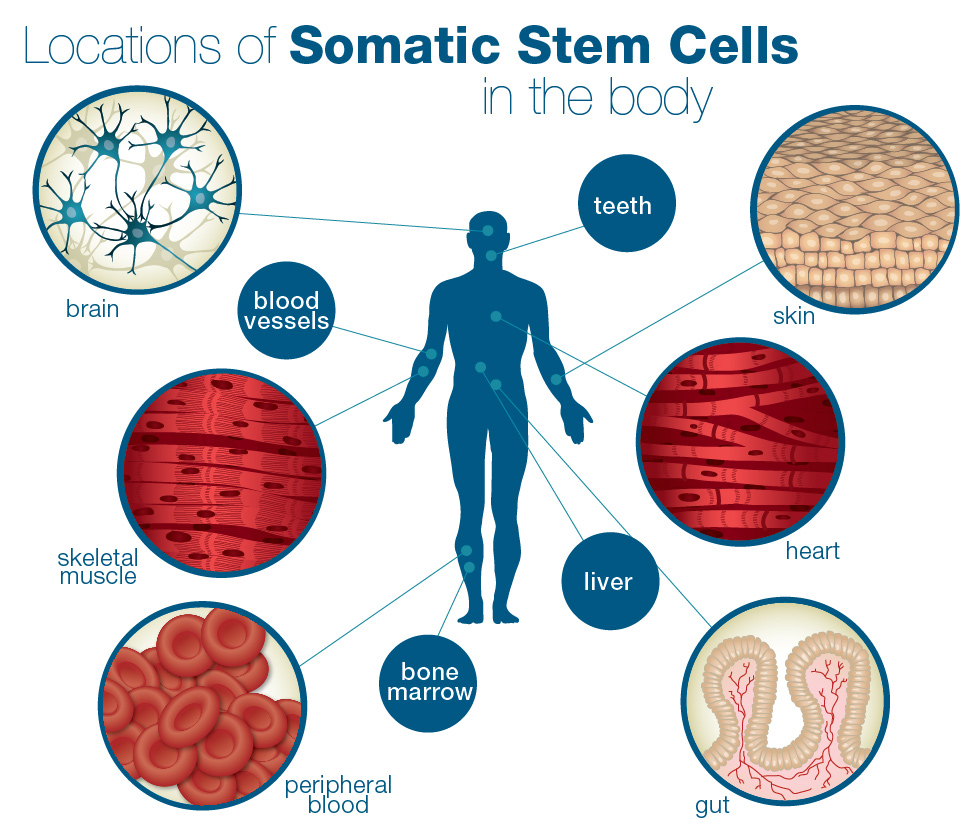
Conversely, somatic types are found throughout the body of a fully developed human. They reside in specific microenvironments, known as niches, within tissues such as the bone marrow, brain, liver, skin, and skeletal muscle. Their primary physiological role is to act as an internal repair system, constantly replenishing cells lost to normal daily wear and tear, injury, or disease. While they are typically multipotent rather than pluripotent, they play a continuous, vital role in maintaining overall biological homeostasis.
Induced Pluripotent Innovations
A major breakthrough in cellular biology is the development of induced pluripotent entities (iPSCs). Scientists discovered that by introducing specific genetic factors, they could genetically reprogram mature, specialized adult cells—such as skin or connective tissue cells—back into a pluripotent state. This remarkable scientific achievement allows researchers to create highly versatile cells that behave similarly to embryonic ones, without the associated ethical concerns. Furthermore, because these can be generated directly from a patient’s own body, they significantly reduce the risk of immune rejection during transplantation therapies.
The Horizon of Cellular Therapy
The study of cellular differentiation and regeneration remains one of the most promising frontiers in medical science. By closely observing how an undifferentiated entity matures into complex tissue, researchers gain invaluable insights into the exact mechanisms of human development and the root causes of congenital defects and degenerative diseases.
Therapeutically, the goal is to direct these versatile building blocks to repair or replace tissues that have been severely damaged by trauma, genetic conditions, or chronic illnesses. From bone marrow transplants used to treat blood disorders to experimental therapies aimed at regenerating neurological pathways and cardiac muscle, the medical application of cellular science continues to expand. As research progresses, the ability to control and guide cellular differentiation will undoubtedly lead to highly targeted, individualized medical treatments that address the underlying cellular deficits of severe illnesses.
