

Every organization running software carries risk. That risk does not diminish over time; it compounds. Every new application, every updated framework, every added device expands the attack surface that adversaries probe for weaknesses. Patch management is the systematic process by which organizations close those weaknesses before they become breaches, and in enterprise environments, getting that process right is one of the most important things an IT team does.
This article examines how patch management specifically protects enterprise IT environments, the mechanisms through which it reduces risk, the ways it supports operational continuity, and the compliance and governance dimensions that make it far more than a technical task.
Patch management in enterprise environments is shaped by scale, complexity, and stakes that smaller organizations rarely face in the same combination. Thousands of endpoints, dozens of application vendors, distributed infrastructure across multiple sites or regions, and regulatory obligations that require demonstrable, documented controls all define the context in which enterprise patch management operates.
Closing the Window That Attackers Exploit
The security logic behind patch management is straightforward: when a vulnerability is publicly disclosed and a vendor releases a fix, the race begins. Attackers scan the internet for systems still running the vulnerable version. IT teams race to test and deploy the patch before those scans find them. The organization’s exposure window is the gap between patch release and patch deployment.
In enterprise environments, that window tends to be wider than it should be. Complex testing requirements, change management approval cycles, compatibility validation across heterogeneous software stacks, and the operational risk of patching production systems during business hours all create legitimate friction that delays deployment. Attackers know this. They deliberately target enterprises precisely because those delays are predictable.
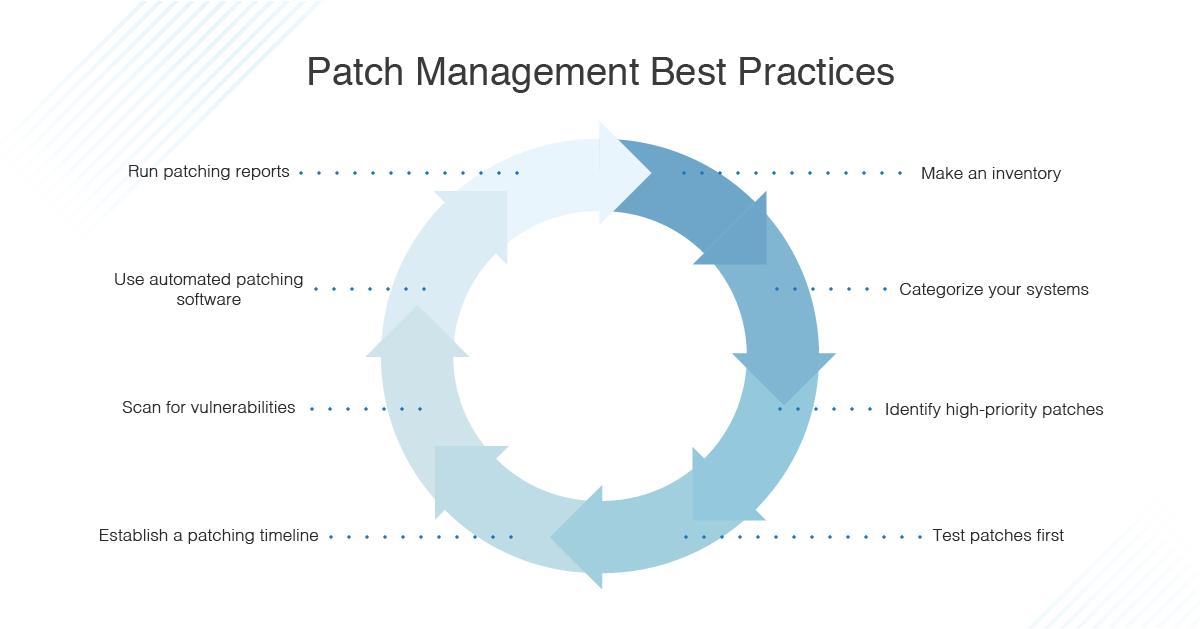
Effective patch management compresses that window without eliminating the controls that make enterprise IT stable. Severity-based prioritization ensures the highest-risk patches move fastest. Streamlined testing workflows using dedicated test environments that mirror production, rather than staging patches on live systems, reduce the time between validation and deployment. Automated rollout to endpoints, followed by systematic verification, ensures patches reach every managed device rather than leaving stragglers that remain exposed indefinitely.
Reducing Ransomware and Malware Exposure
Unpatched software is one of the most consistent entry points for ransomware attacks on enterprise networks. The scenario repeats with enough regularity that it has become a defining pattern: a critical vulnerability is disclosed, a patch is released, and organizations that fail to apply it within weeks or months find themselves facing exactly the attack that patch was designed to prevent.
The connection between delayed patching and ransomware exposure is well-documented. Understanding ransomware and unpatched systems and how attackers specifically target organizations running software with known, fixable flaws helps IT security teams make a compelling internal case for patching timelines that business stakeholders might otherwise regard as overly aggressive.
Beyond ransomware, unpatched systems provide footholds for malware delivery, credential theft, privilege escalation, and lateral movement across the network. A single unpatched machine that an attacker can reach becomes a launchpad for everything else. Enterprise networks, with their high lateral connectivity and the volume of sensitive data in motion, amplify the consequences of any successful initial compromise. Patching is the control that reduces the probability of that initial foothold materializing.
Supporting Compliance and Regulatory Requirements
Enterprise organizations in regulated industries face explicit patching obligations. Healthcare organizations operating under HIPAA must maintain security controls that include keeping systems updated and patched. Payment Card Industry Data Security Standard (PCI DSS) compliance requires that all system components and software be protected from known vulnerabilities. The CIS Controls, widely adopted across industries, include patch management among the foundational safeguards that all organizations should implement.
Compliance auditors do not accept intent or general assurance. They look for evidence: patch compliance reports showing what percentage of managed assets are running current software, records of when patches were applied and verified, documentation of exceptions with associated risk acceptance. An enterprise patch management program that produces this evidence as a natural byproduct of its operation is audit-ready at any time. One that relies on manual processes and ad hoc records creates compliance gaps that are expensive and disruptive to close under audit pressure.
Beyond formal compliance, many enterprise insurance policies and customer contracts now include cybersecurity requirements that implicitly or explicitly address patch management. Demonstrating a structured, documented patching program has become part of the due diligence that enterprise customers and partners expect.
Preserving Operational Stability
Patching protects more than security; it protects operational continuity. Software bugs accumulate on unpatched systems. Performance degrades. Features that depend on current library versions stop functioning correctly. Vendor support for older versions winds down, meaning that when something does break, help is increasingly limited.
An enterprise that runs systematically unpatched software faces compounding technical debt. Systems that could have been kept current with incremental monthly updates instead require complex, high-risk remediation projects that disrupt operations and consume disproportionate IT resources. The cost and disruption of that remediation almost always exceed what regular patching would have required.
There is also a practical argument around vendor support windows. Most enterprise software vendors support only the current and one previous version. Running further behind means running without vendor support, which in regulated industries may itself constitute a compliance violation. Patch management keeps the organization within supportable, defensible versions across its software estate.
Automating at Enterprise Scale
No enterprise IT team can manually track, test, and deploy patches across thousands of endpoints using spreadsheets and scheduled maintenance windows. The operational math simply does not work. Automation is what makes enterprise patch management feasible, and the tooling that supports it ranges from the infrastructure built into enterprise operating system environments to third-party platforms that extend coverage to non-Microsoft software and non-Windows devices.
One foundational layer in Windows environments is built directly into the operating system management stack. Windows enterprise update services provide IT administrators with centralized control over which updates are approved, tested, and deployed across managed Windows endpoints, giving operations teams the visibility and governance they need to manage patching at scale without losing control over what gets applied and when.
Modern patch management platforms extend this further. Third-party patching covering the wide range of applications from productivity suites to development tools to web browsers requires tooling that goes beyond native OS update mechanisms. Automated discovery ensures new software assets are identified and brought under patch management coverage before they become unknown gaps. Compliance dashboards give IT leadership continuous visibility into the organization’s patch posture without requiring manual report generation.
Building Patch Management Into Governance
In mature enterprise IT organizations, patch management is not treated as a purely technical task owned by a sysadmin team. It is embedded in governance frameworks with defined ownership, documented policy, executive visibility, and regular reporting to leadership.
That governance posture reflects how significant patching failures can be. A breach traced to an unpatched vulnerability is not just a technical failure; it is a governance failure, one that regulators, insurers, and boards increasingly treat as evidence of organizational negligence. Building patching into the governance layer with policy that specifies timelines by severity, accountability for exceptions, and reporting cycles that keep leadership informed shifts patch management from reactive to proactive and from invisible to defensible.
Organizations that treat patch management as infrastructure maintenance, recurring and budgeted rather than reactive and emergency-driven, achieve better coverage, lower risk, and a stronger security posture than those that treat each patch cycle as a separate project.
Frequently Asked Questions
How does patch management reduce an enterprise’s attack surface?
By closing known vulnerabilities before attackers can exploit them. Every unpatched security flaw in a system is an open entry point. A consistent patching program systematically eliminates those entry points across the entire managed estate, reducing the number of footholds available to an attacker and raising the cost of a successful breach.
What makes patch management especially challenging in enterprise environments?
Scale, complexity, and competing priorities. Thousands of endpoints running varied software across multiple locations require automated tooling rather than manual processes. Compatibility testing across complex software stacks adds time that smaller organizations do not have. Change management requirements in regulated industries add approval cycles. And patching production systems carries operational risk that must be balanced against the security urgency of applying fixes quickly.
How should organizations handle systems where patches cannot be applied immediately?
Apply compensating controls while working toward remediation. Network segmentation limits what a compromised or vulnerable system can reach. Enhanced monitoring adds visibility into unusual activity. Restricting who can access the vulnerable system reduces the number of potential attack paths. These measures reduce risk without eliminating it, and they must be documented, particularly in regulated industries where exception management is subject to audit scrutiny.
