

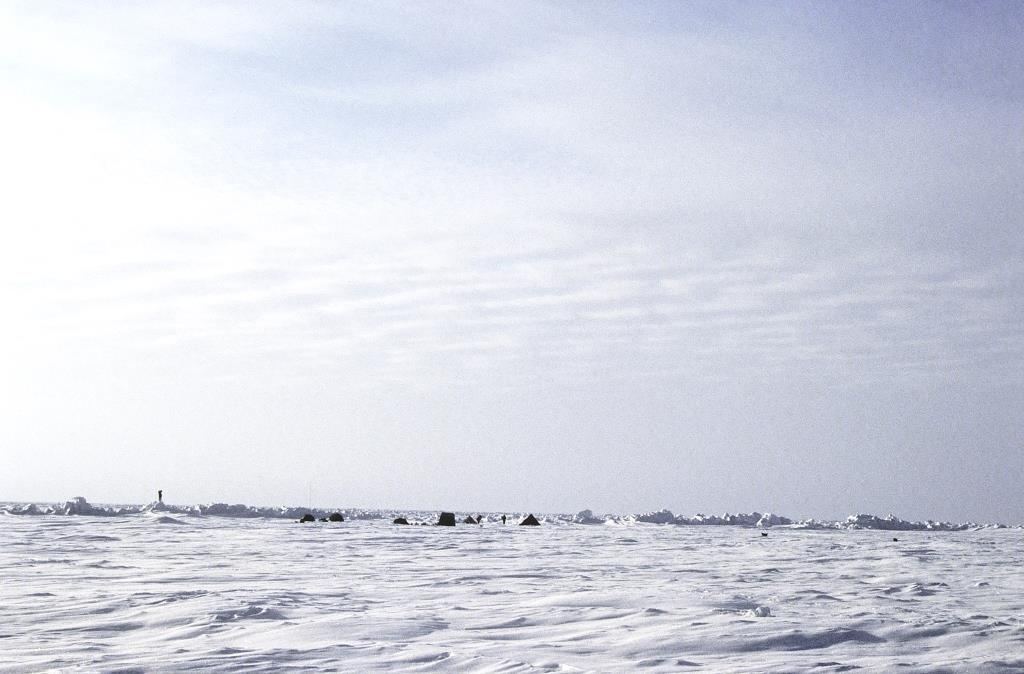
Satellite records and new ocean measurements are converging on a difficult picture for Arctic sea ice: even in years when winter freezing looks promising, the ice that forms is increasingly thin, young and vulnerable to the following summer. Oceanographers blame heat arriving from the Atlantic and Pacific, water a few degrees above freezing that now reaches further north and melts ice from below while warm air attacks it from above. The shift matters because thick, multi-year ice once acted as the Arctic’s insurance policy, surviving bad summers and seeding recovery. As that old ice has vanished, the system has become more volatile, with dramatic losses now possible in a single season of unfavourable winds. Field teams drilling through first-year ice report slushy, salty layers that break up early, while autonomous buoys track temperatures in the water column that would once have stayed safely isolated beneath a barrier of cold, fresh surface water.
What the Evidence Shows
The consequences extend well beyond the polar ocean. Open water absorbs sunlight that ice would reflect, amplifying regional warming, and coastal communities face stronger waves and erosion where the protective ice season has shortened by weeks. Weather researchers continue to examine links between Arctic change and mid-latitude patterns, including persistent heat domes and cold outbreaks, though the strength of those connections remains actively debated. What is not debated is the speed of change in the ice itself, now visible within a single research career. Modelling groups are using the new ocean heat data to test whether their simulations mix heat upward realistically, a known weakness that affects projections for shipping, ecosystems and indigenous livelihoods. The coming decade of observations, gathered by satellites designed to measure ice thickness precisely, will show whether the Arctic’s remaining thick ice regions can endure as a refuge for ice-dependent species. Reporting and analysis from sources such as NASA track the same developments, and specialists following Arctic sea ice decline and ocean heat say the direction is now consistent across independent lines of evidence.
The Wider Context
Funding bodies are watching Arctic sea ice decline and ocean heat closely because the work sits at the junction of basic curiosity and practical return. Grant panels increasingly ask for a path from discovery to application, while researchers push back that the most valuable uses of fundamental science are rarely the ones written into the original proposal. The tension is productive when both sides stay honest about timescales.
What Happens Next
The long view on Arctic sea ice decline and ocean heat is that fields advance by accumulation rather than by single announcements. This result adds a solid, checkable piece to a structure many teams are building, and its authors have shared their data so the piece can be tested from every side. That is how the picture eventually becomes reliable enough to act on. You can follow related developments in our coverage of science.
It is also worth remembering how quickly the picture in this area has changed before. Positions that looked settled a few years ago have been revised as new data arrived, and the same humility is appropriate now. The strongest coverage of this subject, and the most useful advice, tends to come from sources that update their views openly when the facts move, rather than defending an earlier position long after it has stopped fitting the evidence available.
