

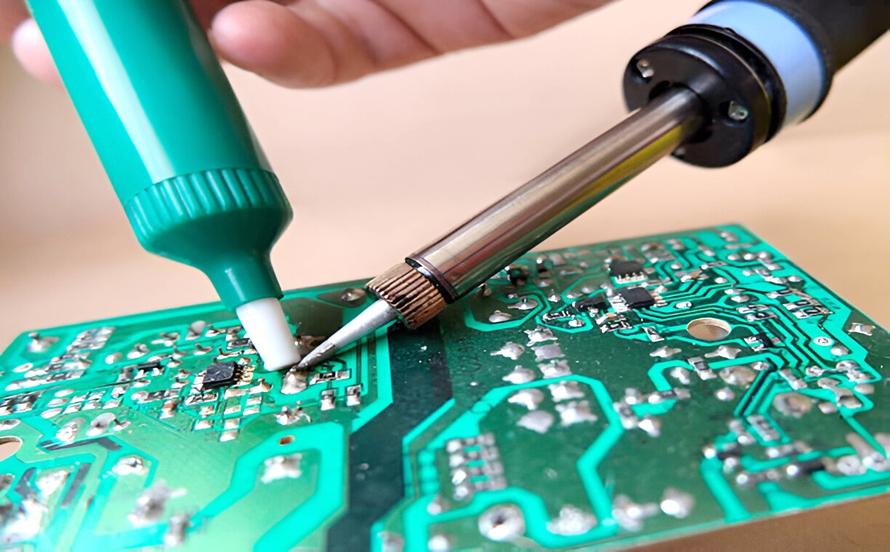
Printed circuit boards (PCBs) are essential to modern electronics, providing the electrical connections needed for components to communicate and perform their intended functions. As electronic devices become smaller, lighter, and more complex, manufacturers increasingly require circuit board solutions that can fit into compact spaces and accommodate unconventional product designs. Flexible printed circuit boards, commonly known as flex PCBs, address these requirements by allowing circuits to bend, fold, or conform to specific shapes.
Flex PCB assembly involves mounting and connecting electronic components to flexible circuit boards using suitable manufacturing techniques. Unlike traditional rigid boards, flexible circuits can accommodate movement and support designs with limited installation space. These characteristics make them valuable in medical equipment, automotive electronics, wearable devices, industrial systems, and consumer products. Understanding the assembly process, advantages, and applications helps manufacturers determine when flexible circuit technology is appropriate for their projects.
What Is Flex PCB Assembly?
Flex PCB assembly is the process of mounting electronic components onto a flexible printed circuit board and establishing reliable electrical connections through soldering or other appropriate interconnection methods. Flexible circuits commonly use polyimide or similar flexible materials as their base substrate, allowing the board to bend without relying on a rigid laminate throughout its structure.
Depending on the application, a flexible circuit may contain a single conductive layer or multiple layers separated by insulating materials. Designs can include surface-mount components, connectors, stiffeners, and other features required for electrical performance and mechanical support.
Flexible circuit assembly differs from rigid PCB assembly because manufacturers must consider substrate movement, heat sensitivity, dimensional stability, and mechanical stress during production. Appropriate material selection and process control help prevent damage while maintaining reliable electrical connections.
How Does the Flex PCB Assembly Process Work?
The assembly process involves several stages, each designed to ensure that components are mounted accurately and the completed circuit meets its intended requirements.
1. Design Review and Material Selection
The process begins with reviewing the circuit design, Gerber files, bill of materials (BOM), component placement data, and assembly drawings. Engineers evaluate the circuit's electrical requirements, bending conditions, installation space, and expected operating environment.
Material selection is especially important. Polyimide is widely used because of its flexibility and temperature resistance, while copper type, thickness, adhesive systems, and coverlay materials must be selected according to the application.
Designers should also consider bend radius, copper routing near bending areas, connector placement, and the location of components that could experience mechanical stress. Reviewing these factors before production helps reduce manufacturing problems.
2. Flexible PCB Fabrication and Preparation
The flexible circuit is fabricated according to the approved design. Manufacturing operations may include copper patterning, drilling, coverlay application, surface finishing, and electrical verification.
Some designs incorporate stiffeners beneath connectors or component mounting areas. These stiffeners provide localized support without converting the entire flexible circuit into a rigid board.
After fabrication, the flexible PCB is inspected for dimensional accuracy, conductor defects, and other potential issues. Proper preparation helps ensure that the substrate is suitable for subsequent assembly operations.
3. Solder Paste Application and Component Placement
For surface-mount assembly, solder paste is applied to the appropriate pads using a stencil or another suitable deposition method. The flexible board must be supported adequately during this process to maintain alignment and prevent movement.
Automated pick-and-place equipment positions components according to the design data. Because flexible substrates can be less rigid than conventional boards, specialized fixtures or carrier panels may be used to improve stability and placement accuracy.
Correct alignment is particularly important for fine-pitch components, small passive devices, and densely populated circuit designs.
4. Soldering and Component Attachment
Reflow soldering is commonly used for surface-mount components. During this stage, the assembly passes through a controlled temperature profile that melts the solder paste and forms electrical connections.
Temperature management requires careful attention because the flexible substrate and its materials may respond differently to heat than a rigid PCB. The soldering profile must suit the components, solder materials, and substrate specifications.
Through-hole components may also be used in flexible circuit designs when appropriate. Their installation can require additional support and process planning to avoid unnecessary stress on the flexible material.
5. Inspection and Electrical Testing
After soldering, the assembly undergoes inspection to identify component placement errors, soldering defects, damaged pads, and other manufacturing issues.
Automated optical inspection (AOI) can detect many visible defects, while X-ray inspection may be useful for certain components with hidden solder connections. Electrical continuity testing and functional testing help verify circuit operation.
For applications involving repeated movement, additional mechanical evaluation may be necessary to assess whether the design can withstand its intended bending conditions. Testing requirements should reflect the product's actual use rather than assuming every flexible circuit will experience continuous flexing.
Key Benefits of Flex PCB Assembly
Flexible circuit assembly offers several advantages for products with specialized mechanical and electrical requirements.
Compact and Lightweight Designs
Flexible circuits can fit into narrow spaces and follow product contours, helping engineers reduce wiring complexity and make more efficient use of available space. This is particularly useful for compact electronic devices where conventional rigid boards may be difficult to install.
Improved Connection Flexibility
A flexible circuit can connect components or modules located in different parts of a product. In suitable designs, this can reduce the need for separate cables, wire harnesses, and additional connectors.
Fewer interconnections may simplify assembly, although the actual benefit depends on the product architecture.
Support for Dynamic Applications
Certain flexible circuits are designed to bend repeatedly during normal operation. Examples include moving mechanisms, foldable devices, and specialized equipment with moving components.
For these applications, the circuit must be engineered for the expected bend radius, movement frequency, copper configuration, and service life. Not every flex PCB is suitable for repeated dynamic bending.
Greater Design Freedom
Flexible substrates support unconventional layouts and three-dimensional packaging arrangements. Designers can integrate circuits into curved housings, narrow enclosures, and products with limited installation space.
This freedom can support innovative product designs while maintaining the required electrical connections.
Common Applications of Flex PCB Assembly
Flexible circuit boards are used across several industries because of their compact construction and adaptable form.
Consumer electronics: Smartphones, cameras, wearable devices, and compact electronic products use flexible circuits for internal connections and space-efficient layouts.
Medical equipment: Flexible circuits may be used in diagnostic instruments, wearable monitoring devices, and specialized medical electronics where compact construction is important. Relevant safety and regulatory requirements must still be met.
Automotive electronics: Flexible assemblies support selected sensor systems, display modules, lighting systems, and connections within compact vehicle electronics.
Industrial equipment: Flexible circuits can connect sensors, moving mechanisms, and control modules in machinery where space or routing constraints make them suitable.
Aerospace and defense electronics: Specialized flexible circuits may be used in weight-sensitive equipment and compact electronic systems, subject to stringent design, qualification, and reliability requirements.
Telecommunications: Flexible circuits can support compact modules and interconnections within communication equipment.
The suitability of flex PCB technology depends on electrical specifications, mechanical conditions, materials, and manufacturing requirements.
Factors to Consider When Selecting a Flex PCB Assembly Manufacturer
Choosing a manufacturing partner requires evaluating technical capabilities, quality procedures, and experience with flexible circuit designs.
First, assess whether the manufacturer understands flexible substrate handling, component placement, soldering profiles, stiffener integration, and bend-related design considerations.
Second, review material sourcing and traceability practices. Consistent materials and verified components help maintain production quality.
Third, evaluate inspection and testing capabilities. AOI, electrical testing, dimensional inspection, and application-specific mechanical tests may be required.
Cost and lead time should also be considered. Flexible circuits may involve specialized materials, tooling, fixtures, and additional process controls that influence the total manufacturing cost.
Finally, confirm that the supplier can support the required production volume, engineering revisions, and documentation. Clear communication during design review and production planning helps minimize delays and avoid unnecessary rework.
Conclusion
Flex PCB assembly enables manufacturers to develop compact, lightweight, and adaptable electronic products for applications where conventional rigid circuit boards may be unsuitable. Through appropriate material selection, careful component placement, controlled soldering, and thorough testing, flexible circuits can meet a wide range of electrical and mechanical requirements.
When evaluating Flex PCB Assembly Services, businesses should consider flexible circuit expertise, manufacturing equipment, quality control procedures, material traceability, and the ability to meet application-specific requirements. Selecting an experienced manufacturing partner helps support reliable circuit performance, efficient product development, and consistent assembly quality.
