

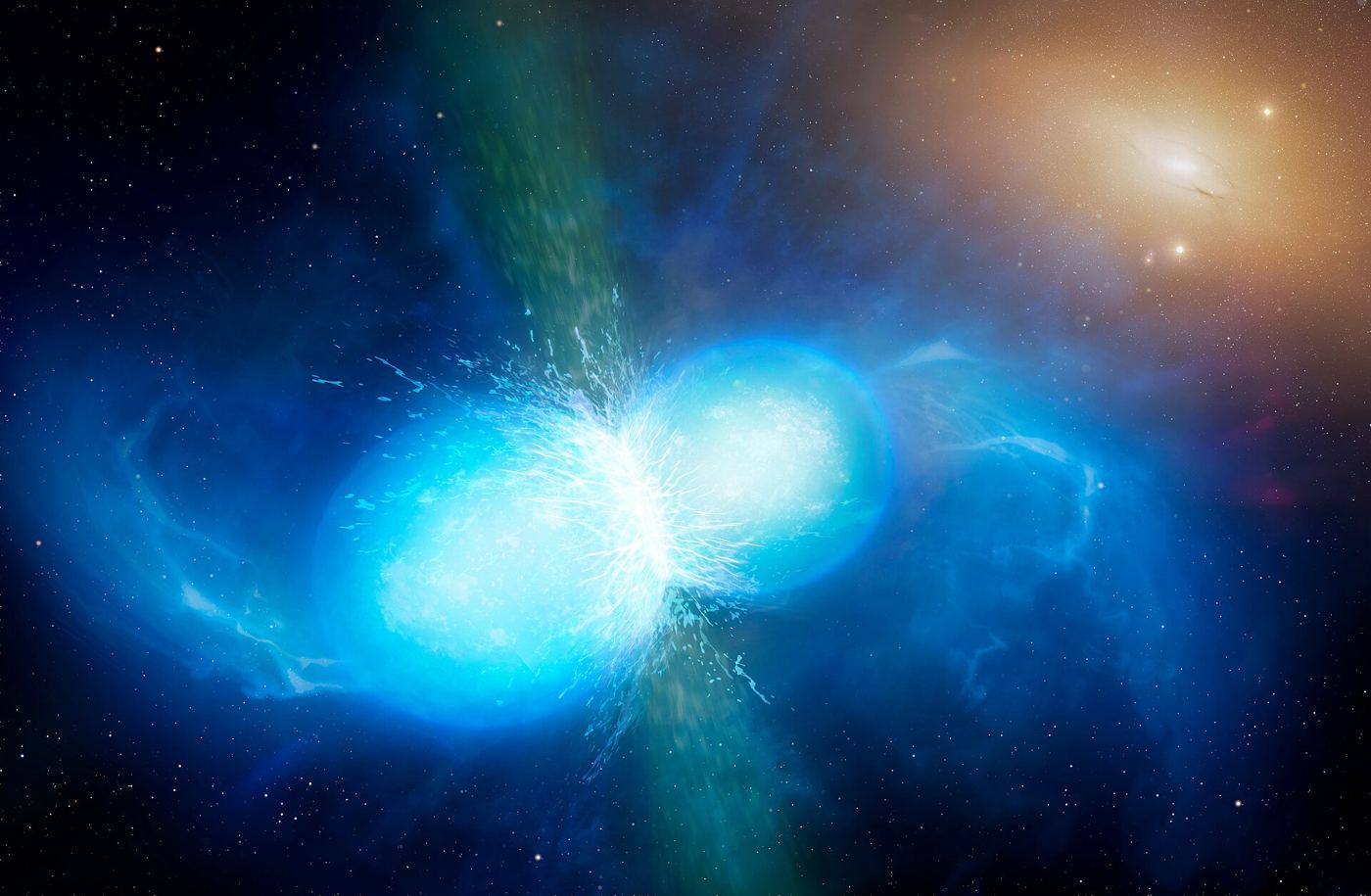
The James Webb Space Telescope has proved that a giant star in the Andromeda galaxy swallowed its smaller companion, in the first direct observation of a giant star engulfing another star. The findings were published in Nature on 18 November 2026, led by Viraj Karambelkar, a NASA Hubble Fellow at Columbia University. The larger star, nicknamed Big Bao, is about seven times more massive than the Sun, 18,000 times brighter and puffed up to 350 times the Sun’s diameter. Its companion, Little Bao, is about 0.7 times the mass of the Sun and orbited at roughly the distance between Mars and the Sun. After the smaller star touched the giant’s surface, it spiralled into the core in only seven orbits over seven years, triggering an eruption a million times brighter than the Sun. Webb observed the aftermath on 24 December 2025, just 47 days after the eruption peaked.
What the Evidence Shows
Astronomers had watched the pair for years before the merger, which is what makes the discovery so rare. They tracked the brightening with the WINTER telescope at Palomar Observatory, the NEOWISE space telescope, SPHEREx and the Zwicky Transient Facility, which caught the eruption on 17 October 2025. The process is called common envelope evolution: the giant’s outer layers form a shared envelope around both stars, and drag from that gas steals orbital energy until the stars merge. The merged star, now simply called Bao, may have been rejuvenated by the collision, gaining a new lease on life. Whether a companion merges or survives inside a giant also decides whether the pair leaves behind a tight binary, the starting point for systems that can one day become sources of gravitational waves. Reporting and analysis from sources such as NASA track the same developments, and specialists following the stellar merger Bao say the direction is now consistent across independent lines of evidence.
The Wider Context
Funding bodies are watching the stellar merger Bao closely because the work sits at the junction of basic curiosity and practical return. Grant panels increasingly ask for a path from discovery to application, while researchers push back that the most valuable uses of fundamental science are rarely the ones written into the original proposal. The tension is productive when both sides stay honest about timescales.
What Happens Next
The long view on the stellar merger Bao is that fields advance by accumulation rather than by single announcements. This result adds a solid, checkable piece to a structure many teams are building, and its authors have shared their data so the piece can be tested from every side. That is how the picture eventually becomes reliable enough to act on. You can follow related developments in our coverage of science.
It is also worth remembering how quickly the picture in this area has changed before. Positions that looked settled a few years ago have been revised as new data arrived, and the same humility is appropriate now. The strongest coverage of this subject, and the most useful advice, tends to come from sources that update their views openly when the facts move, rather than defending an earlier position long after it has stopped fitting the evidence available.
