

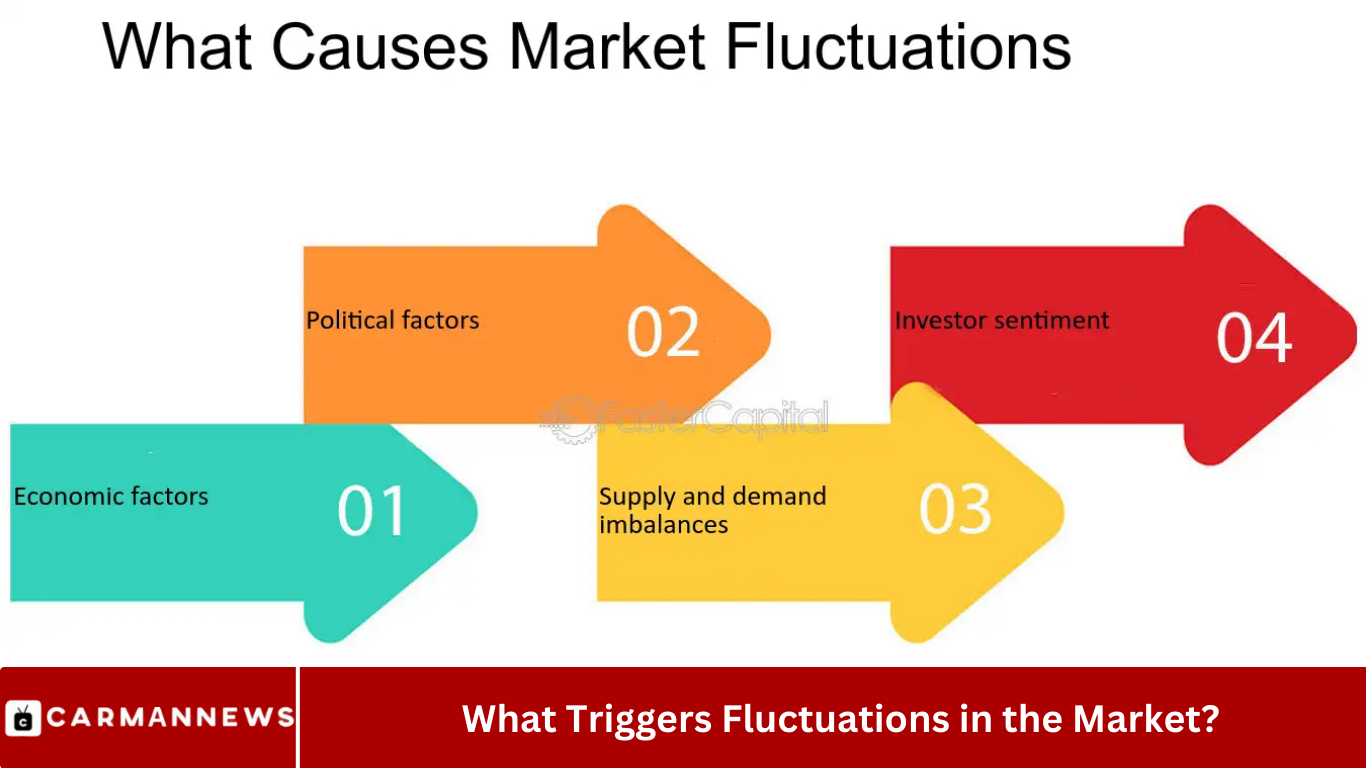
Financial markets are often compared to a rollercoaster—rising steadily one moment and plummeting the next. Investors, traders, and even casual observers frequently ask: what triggers fluctuations in the market?
Market volatility can feel unpredictable, but the underlying causes are usually well-understood. By examining these factors, we can gain insight into why markets move, how to anticipate changes, and how to navigate uncertainty.
In this article, we’ll explore the main triggers of market fluctuations, their impact on investors, and strategies to manage risk during turbulent times.
More Read: Bridging Worlds, Driving Change: Leveraging International Partnerships
Understanding Market Fluctuations
Market fluctuations, or volatility, refer to the frequency and magnitude of price changes in financial markets. These changes can happen over minutes, hours, days, or longer periods, and they affect stocks, bonds, commodities, and currencies alike.
Volatility is a natural feature of any market. While some investors may panic during sudden swings, others view fluctuations as opportunities to buy undervalued assets or sell overvalued ones. Understanding what drives market movements is crucial for informed decision-making and long-term success.
Key Factors That Trigger Market Fluctuations
Market fluctuations rarely occur without cause. Several factors—ranging from economic indicators to investor sentiment—can trigger sharp changes in asset prices. Below, we break down the most common causes.
1. Economic Data and Indicators
Economic reports such as GDP growth, unemployment rates, inflation data, and consumer confidence play a significant role in influencing market behavior. For example:
- Inflation Reports: Rising inflation may prompt central banks to raise interest rates, increasing borrowing costs and potentially slowing economic growth. Markets often react negatively to inflation spikes.
- Employment Data: Strong job growth can signal a healthy economy, boosting investor confidence, while disappointing numbers can trigger sell-offs.
- Consumer Spending: High consumer spending indicates strong demand, encouraging investment in corporate stocks. Conversely, declining spending may signal a slowdown.
Markets respond not just to the numbers themselves but also to expectations versus reality. Surprises, whether positive or negative, can lead to sharp price movements.
2. Interest Rates and Monetary Policy
Central banks, like the Federal Reserve in the U.S., wield significant influence over markets through interest rate adjustments and monetary policy.
- Rate Hikes: When interest rates rise, borrowing costs increase for both businesses and consumers. This can slow economic growth and reduce corporate profits, leading to market declines.
- Rate Cuts: Lower interest rates make borrowing cheaper, encouraging investment and spending, often leading to bullish market behavior.
Monetary policy also affects investor behavior in the bond and currency markets. Even the anticipation of future rate changes can create market swings.
3. Corporate Performance and Earnings Reports
Individual companies contribute to market fluctuations through their performance reports:
- Earnings Surprises: A company reporting higher-than-expected earnings can see its stock price soar, while disappointing results may trigger sharp declines.
- Guidance Updates: Forward-looking statements about revenue and growth prospects also influence investor decisions.
Since markets are forward-looking, the perception of a company’s future health can sometimes trigger more volatility than the actual results.
4. Geopolitical Events
Political uncertainty and global conflicts can create sudden market turbulence:
- Wars and Conflicts: Armed conflicts often lead to global economic uncertainty, causing stock and commodity prices to swing sharply.
- Trade Disputes: Tariffs and trade restrictions can disrupt supply chains, impacting company earnings and overall market stability.
- Elections and Policy Changes: Major elections or sudden regulatory shifts can prompt investors to reassess risk, triggering fluctuations.
Markets thrive on stability, so unexpected geopolitical events often lead to heightened volatility.
5. Investor Sentiment and Psychology
Human behavior is a powerful driver of market fluctuations. Emotions such as fear, greed, and overconfidence can amplify market movements:
- Herd Mentality: Investors often follow the crowd, leading to rapid buying or selling.
- Panic Selling: Negative news can trigger fear-based selling, driving prices lower than fundamentals might justify.
- Speculation: Over-enthusiasm about emerging trends or technologies can inflate asset prices, creating bubbles that eventually burst.
Behavioral finance highlights that markets are not purely rational; sentiment often drives short-term fluctuations.
6. Global Economic Trends
Markets are interconnected. Events in one country can ripple across the globe:
- Commodity Prices: Oil, gold, and other commodities influence multiple sectors. A sudden oil price spike can affect transportation and manufacturing stocks.
- Currency Fluctuations: Changes in exchange rates impact multinational corporations’ earnings and investor returns.
- Global Recessions: Economic slowdowns in major economies can trigger worldwide market declines.
Understanding global trends is essential for investors, particularly those with international exposure.
7. Technological Factors and High-Frequency Trading
Modern markets are heavily influenced by technology:
- Algorithmic Trading: Automated trading systems can amplify short-term market movements, sometimes triggering flash crashes.
- News Analytics and Social Media: Rapid dissemination of news, rumors, and analysis can cause sudden spikes or drops in stock prices.
While technology enhances efficiency, it can also increase volatility in the short term.
The Role of Market Corrections and Crashes
Market fluctuations are natural, but severe swings can lead to corrections or crashes:
- Market Correction: A drop of 10% or more in major indices over a short period is considered a correction. These often result from economic concerns or overvalued markets.
- Market Crash: A sudden, severe decline exceeding 20% can occur during periods of panic, economic shock, or systemic failure.
Both corrections and crashes are integral to market cycles, helping to rebalance valuations and provide buying opportunities for long-term investors.
How Investors Can Navigate Market Fluctuations
While market fluctuations can be unsettling, there are strategies investors can use to manage risk:
1. Diversification
Spreading investments across asset classes—stocks, bonds, real estate, and commodities—reduces the impact of any single market swing.
2. Long-Term Perspective
Short-term volatility can feel intense, but markets historically recover over the long term. Staying focused on long-term goals helps avoid reactionary decisions.
3. Risk Management
Setting stop-loss orders, adjusting position sizes, and maintaining emergency funds can protect investors during turbulent periods.
4. Staying Informed
Keeping up with economic indicators, company earnings, and geopolitical events helps investors anticipate potential market swings.
5. Emotional Discipline
Avoiding impulsive decisions based on fear or greed is crucial. Consistent, rational strategies outperform reactive trading over time.
Frequently Asked Question
What exactly causes market fluctuations?
Market fluctuations are primarily caused by economic data, corporate earnings, geopolitical events, investor sentiment, interest rate changes, global trends, and sometimes technological factors like algorithmic trading. These factors influence supply and demand for assets, driving price changes.
Are market fluctuations the same as a market crash?
No. Market fluctuations refer to normal price ups and downs, which are common in all markets. A market crash is a sudden, severe drop, often exceeding 20%, usually triggered by panic selling, economic shocks, or systemic failures.
How does investor psychology affect market volatility?
Investor emotions like fear, greed, and herd behavior can amplify fluctuations. For example, panic selling after negative news can cause larger-than-expected price drops, while speculative buying can inflate asset prices temporarily.
Do economic indicators always trigger market swings?
Not always. Markets often react to expectations versus reality. If economic data meets expectations, markets may remain stable; however, surprises—positive or negative—can trigger significant volatility.
Can global events influence local market fluctuations?
Yes. Markets are interconnected. Events like oil price spikes, currency changes, trade disputes, or recessions in major economies can impact local markets, even if the domestic economy is stable.
How do interest rates affect market volatility?
Rising interest rates can slow economic growth by increasing borrowing costs, often leading to market declines. Conversely, rate cuts can stimulate investment and spending, potentially boosting markets. Anticipation of rate changes also influences investor behavior.
market fluctuations be predicted?
While it’s impossible to predict exact short-term movements, understanding key triggers like economic indicators, corporate performance, geopolitical events, and investor sentiment can help investors anticipate trends and manage risk effectively.
Conclusion
Market fluctuations are an inherent part of investing. They are triggered by a combination of economic data, corporate performance, geopolitical events, investor psychology, and global trends. While volatility can be unsettling, it also presents opportunities for informed investors who understand the underlying causes. By staying informed, diversifying portfolios, and maintaining a long-term perspective, investors can navigate market turbulence with confidence. Understanding what triggers fluctuations in the market is not just about predicting the next dip—it’s about building resilience and making smarter investment decisions for the future.