

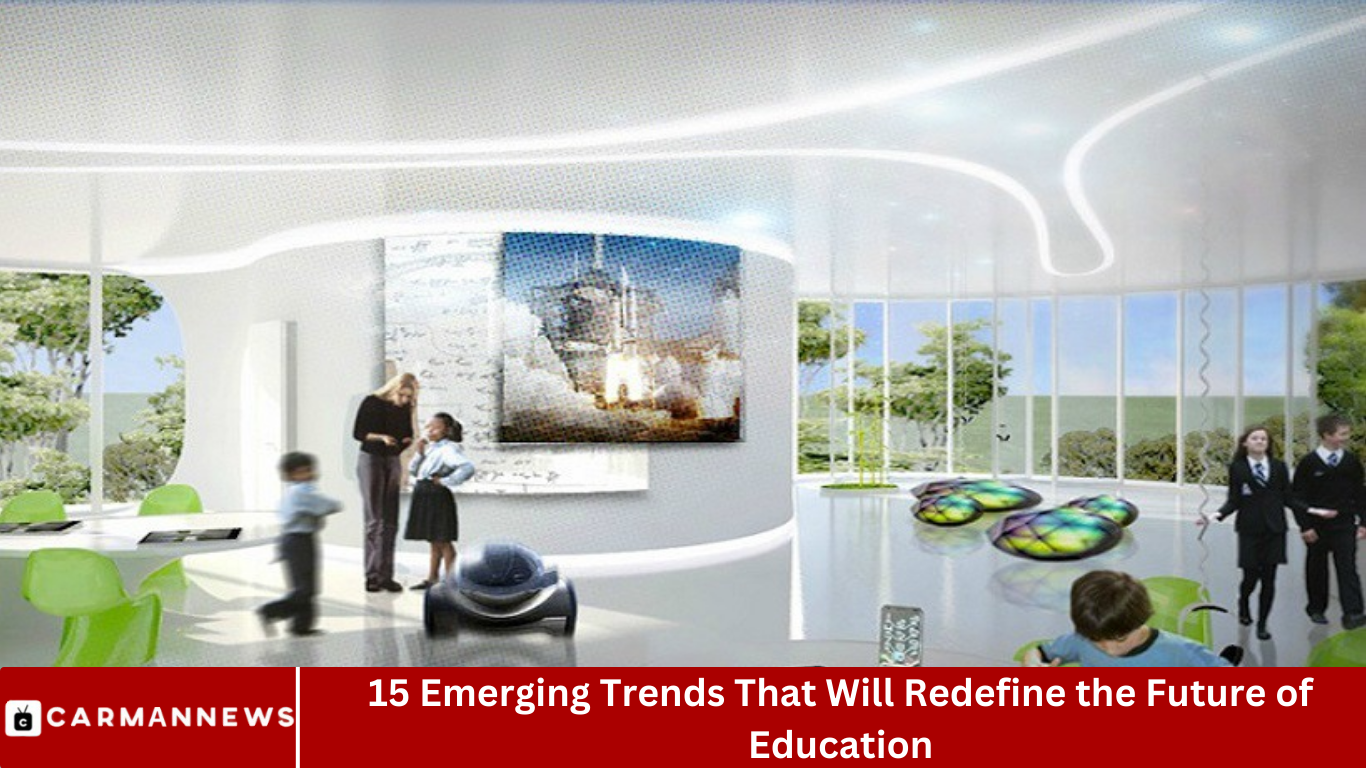
The world of education is undergoing rapid and unprecedented transformation. Driven by advances in technology, changes in student expectations, and global shifts in workforce needs, modern learning environments are being reshaped before our eyes.
From AI-powered tutoring to flexible hybrid classrooms, the future of education promises to be more accessible, personalized, and innovative than ever before. In this comprehensive guide, we explore 15 emerging trends that are set to redefine the future of education in schools, universities, and beyond.
More Read: How to Choose the Right Online Course in 5 Simple Steps
1. Artificial Intelligence (AI) in the Classroom
AI in education is revolutionizing the way students learn and teachers instruct. AI-powered tools can personalize content, identify learning gaps, automate grading, and even act as virtual tutors.
Popular applications include:
- Adaptive learning platforms that adjust to each student’s pace
- Chatbots that answer questions in real-time
- Predictive analytics that help educators forecast student performance
This trend is poised to make education more efficient and tailored to individual learning styles.
2. Hybrid and Blended Learning Models
The rise of hybrid learning—a mix of in-person and online education—has become a staple in the post-pandemic era. Students now expect flexibility in how and when they learn.
Blended learning models combine traditional teaching with digital tools, allowing for:
- More student autonomy
- Real-time feedback
- Integration of multimedia resources
This approach is ideal for accommodating diverse learners and improving accessibility.
3. Personalized Learning Paths
With technology, personalized education is no longer a dream—it’s a reality. Students can now follow individualized learning paths based on their interests, pace, and proficiency levels.
Key tools supporting this trend:
- Learning Management Systems (LMS)
- AI-driven analytics
- Competency-based education platforms
This ensures that no student is left behind and that each learner can thrive at their own pace.
4. Gamification and Game-Based Learning
Gamification in education uses elements of game design—like points, leaderboards, and rewards—to make learning more engaging and fun. Game-based learning, on the other hand, involves the use of actual educational games to teach concepts.
Benefits include:
- Increased student motivation
- Better retention of information
- Improved problem-solving skills
Platforms like Kahoot!, Minecraft Education, and Duolingo are already pioneering this space.
5. Lifelong Learning and Microlearning
The idea that education ends after school or college is outdated. Lifelong learning is becoming essential in today’s rapidly changing job market.
Trends include:
- Microlearning modules for quick, targeted learning
- On-demand online courses (e.g., Coursera, LinkedIn Learning)
- Professional upskilling through certifications and digital badges
This trend empowers individuals to stay competitive and adaptable throughout their careers.
6. EdTech Integration
The education technology (EdTech) industry is booming. From virtual reality (VR) to cloud-based collaboration tools, EdTech is transforming classrooms into dynamic, interactive learning spaces.
Examples of EdTech tools:
- Virtual whiteboards (e.g., Jamboard, Miro)
- Classroom management software
- Online testing and assessment tools
With the right implementation, EdTech can enhance both teaching and learning outcomes.
7. Competency-Based Education (CBE)
Competency-based education focuses on mastery of skills rather than time spent in class. Students progress once they’ve demonstrated they understand a concept, not when a semester ends.
Advantages of CBE:
- Encourages deep learning
- Reduces unnecessary repetition
- Helps close achievement gaps
This approach is especially powerful in career and technical education (CTE) programs.
8. Emphasis on Social-Emotional Learning (SEL)
Modern education recognizes that emotional intelligence is as important as academic intelligence. Social-emotional learning (SEL) helps students manage emotions, build relationships, and make responsible decisions.
Schools are integrating SEL through:
- Dedicated SEL curriculum
- Mindfulness and meditation sessions
- Mental health awareness programs
This trend promotes well-rounded, emotionally resilient learners.
9. Project-Based and Inquiry-Based Learning
Project-based learning (PBL) and inquiry-based learning focus on real-world application of knowledge. Instead of passive memorization, students actively explore complex questions and problems.
Benefits include:
- Enhanced critical thinking and collaboration
- Greater engagement and ownership
- Development of 21st-century skills
These methods prepare students for the future workforce and civic engagement.
10. Rise of Augmented Reality (AR) and Virtual Reality (VR)
AR and VR in education are creating immersive experiences that deepen understanding and engagement. Imagine learning anatomy through a 3D model or taking a virtual field trip to Ancient Rome.
Applications include:
- VR labs for science experiments
- AR apps for language and literacy development
- Immersive historical simulations
This trend makes learning more experiential and memorable.
11. Global Classrooms and Cultural Exchange
With the internet, education is no longer confined by geography. Global classrooms enable students to collaborate with peers around the world, fostering cross-cultural understanding.
Tools and trends include:
- Virtual exchange programs
- Global projects using platforms like ePals
- Language learning through real-time conversation tools
This promotes global citizenship and prepares students for an interconnected world.
12. Blockchain in Education
Blockchain is not just for cryptocurrency—it’s making waves in education too. Blockchain in education provides secure, transparent ways to store credentials, transcripts, and learning history.
Potential benefits:
- Tamper-proof academic records
- Decentralized certification
- Enhanced student data privacy
This trend could eliminate fraud and simplify administrative processes in education.
13. Focus on Sustainability and Green Education
Students today are more environmentally conscious than ever. Sustainability education is gaining traction, both as a subject and as a practice within schools.
Key areas of focus:
- Integrating climate change education into the curriculum
- Promoting eco-friendly school practices
- Encouraging student-led sustainability projects
This cultivates responsible future leaders who care for the planet.
14. Teacher Roles Are Evolving
The traditional role of teachers is shifting from being the “sage on the stage” to the guide on the side. Educators now act more as facilitators, coaches, and mentors.
What’s changing:
- Teachers use data to personalize instruction
- They integrate technology meaningfully
- Professional development focuses on digital fluency and emotional intelligence
Empowering teachers with the right tools and training is crucial for the success of future classrooms.
15. Equity and Inclusion in Education
Educational equity and inclusion are at the forefront of educational reform. There is growing awareness of the need to address disparities based on race, gender, disability, and socio-economic status.
Key initiatives include:
- Accessible learning materials for all students
- Culturally responsive teaching
- Anti-bias and anti-racism training for educators
The goal is to ensure every learner has a fair chance to succeed, regardless of background.
Frequently Asked Question
What are the most important trends shaping the future of education?
Some of the most impactful trends include AI-powered learning tools, hybrid and blended learning models, personalized learning, gamification, social-emotional learning (SEL), virtual reality (VR), and the rise of EdTech platforms. These innovations are redefining how students learn and how educators teach.
How is artificial intelligence changing education?
AI is transforming education through personalized tutoring, automated grading, learning analytics, and adaptive learning systems that adjust content based on a student’s progress. It enables a more customized and efficient learning experience.
What is hybrid learning and why is it gaining popularity?
Hybrid learning combines online and in-person instruction, giving students greater flexibility and access to diverse resources. It’s gaining popularity because it supports different learning styles and allows for more self-paced and remote learning options, especially in a post-pandemic world.
Why is personalized learning important in modern classrooms?
Personalized learning tailors instruction to a student’s individual needs, pace, and interests. This approach increases engagement, helps close learning gaps, and improves academic outcomes by allowing students to learn in ways that suit them best.
How does gamification enhance student learning?
Gamification makes learning more interactive and enjoyable by incorporating game elements like points, levels, and rewards. It boosts motivation, encourages healthy competition, and helps students retain information more effectively.
What role does technology (EdTech) play in the future of education?
EdTech tools enable interactive learning environments, support remote education, and provide data-driven insights into student performance. From LMS platforms to VR labs and collaboration tools, technology will continue to drive innovation in teaching and learning.
How can schools prepare for these emerging trends in education?
To stay ahead, schools should:
- Invest in teacher training and digital tools
- Embrace flexible learning models
- Prioritize equity and inclusion
- Encourage project-based and lifelong learning
- Stay updated on EdTech developments and global best practices
Conclusion
The future of education is being reshaped by powerful trends that prioritize innovation, personalization, and inclusivity. As technology advances and student needs evolve, education must adapt to remain relevant and effective. From AI-driven tools to global classrooms and social-emotional learning, these 15 emerging trends offer a roadmap for transforming how we teach and learn. By embracing these changes, educators, institutions, and learners can build a more equitable, engaging, and future-ready education system for generations to come.