

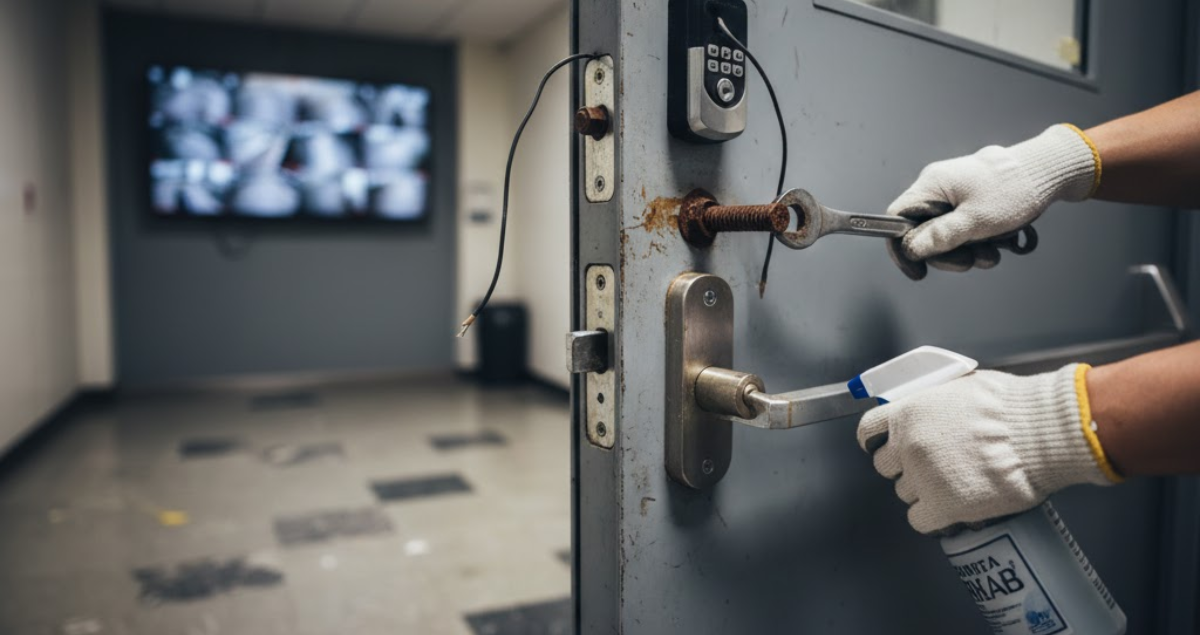
A cracked panel. A door that sticks on the track. A closer that doesn’t pull the door fully shut anymore. These are the kinds of issues that get logged on a maintenance list at commercial properties and then, without anyone making a deliberate decision, end up staying on that list longer than they should. The reasoning is usually practical: the building is still open, customers are still coming through, and the door is technically functioning. It just needs attention.
What that framing misses is that a compromised commercial door isn’t a cosmetic inconvenience waiting to be scheduled. It’s an active security vulnerability and, in some cases, a liability exposure that grows with every day it remains unaddressed. Property managers, business owners, and commercial tenants who work with commercial door repair in toronto professionals consistently find that the scope of the problem, once properly assessed, is larger than what was visible from the surface. Understanding why requires looking at what a commercial door actually does and what happens when it stops doing it properly.
Security Gaps That Aren’t Always Obvious
A commercial glass door that is cracked, misaligned, or operating with a failing lock mechanism provides significantly less resistance to forced entry than it appears to. Glass that has sustained impact damage, even if still in place, has already compromised its structural integrity. Tempered glass is designed to shatter into relatively safe fragments rather than dangerous shards, but once it has been struck and cracked, it no longer behaves as intended. The resistance it provides against a second impact is a fraction of what it was.
Door frames that have shifted due to settling, thermal expansion, or minor impacts create gaps at the door’s edges that compromise both the seal and the lock engagement. A lock whose bolt doesn’t fully seat in the strike plate because the frame has moved is a lock that can be defeated with relatively little force. This is the kind of vulnerability that doesn’t announce itself in a maintenance log but gets identified immediately by anyone attempting to exploit it.
For commercial properties that handle cash, store valuable inventory, or operate in areas with elevated break-in risk, a compromised entry door represents a meaningful change in their risk profile. Insurance policies may have provisions requiring property owners to maintain security-grade entry points in functional condition. A break-in that occurs through a door that was known to be damaged can create complications in the claims process that a timely repair would have avoided entirely.
Customer-Facing Damage Has a Compounding Effect
Commercial doors are the first and last thing customers interact with when visiting a business. A door that requires an awkward shoulder-push to open, a glass panel that’s visibly cracked or repaired with tape, or an automatic door that hesitates and grinds before moving communicates something about a business that no amount of interior investment can fully counteract. First impressions form quickly and are difficult to revise.
For retail businesses, medical offices, restaurants, and professional service providers, the physical condition of an entry point directly affects perceived professionalism and the confidence customers feel in the business. Research consistently shows that physical environment strongly influences consumer trust, and entry points are a significant component of that. The cost of a door repair is almost always less than the revenue implication of a customer who walks away with a negative impression before they’ve even entered the space.
Liability Exposure from Functional Failures
Beyond security, commercial doors that aren’t functioning correctly create genuine slip-and-fall and injury liability. Automatic doors that fail to open fully, or that open and reverse unpredictably, create collision risks for customers and staff. A door closer that slams a heavy glass door rather than closing it with controlled resistance can injure someone who is caught in the doorway. Glass panels that have been compromised can fail unexpectedly under normal door use, creating a sudden safety hazard.
In Ontario, commercial property owners have a legal duty of care to maintain their premises in a reasonably safe condition. A door that presents a known hazard and remains unrepaired is a documented failure to meet that standard. The potential cost of a single personal injury claim is orders of magnitude higher than the cost of the repair that would have prevented it.
Energy Efficiency and the Ongoing Cost of Ignoring Door Seals
Commercial properties with compromised door seals are paying for it quietly every month on their energy bills. A door that doesn’t seat properly in its frame allows conditioned air to escape and exterior air to infiltrate continuously. In a Toronto climate with significant heating demands in winter and cooling loads in summer, even a modest door seal failure represents a measurable increase in energy costs. For businesses with high foot traffic where the door opens frequently, a door that doesn’t close fully amplifies this effect significantly.
The right repair restores the seal, the alignment, and the closer function simultaneously. It’s not just about making the door look better or operate more smoothly; it’s about restoring the building envelope that the door is supposed to maintain.
Why Prompt Assessment Matters More Than the Repair Itself
The most useful thing about working with a professional door repair technician isn’t just the repair. It’s the assessment. A technician who looks at a commercial door that’s been flagged as “sticking a bit” will often identify the actual cause, which might be a frame shift, a worn track, a failing hinge, or a glass unit that’s under stress, before those secondary issues become primary ones. Catching a problem while it’s still a frame alignment issue is significantly less expensive than catching it after the glass has failed because of the uneven load.
For property managers overseeing multiple commercial units or high-traffic spaces, scheduling a proactive assessment at the first sign of performance degradation is almost always the most economical approach. The disruption of a same-day assessment and repair is minimal. The disruption of an emergency replacement after a complete door failure is not.