

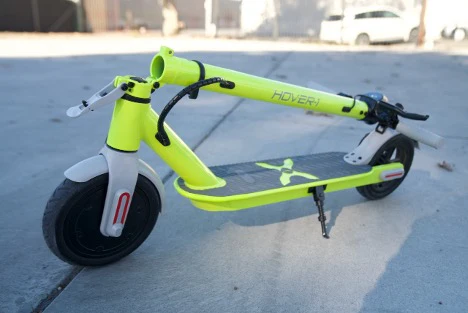
Personal micro-mobility has gone from a novelty category to a practical transportation choice for a growing number of city dwellers, commuters, and campus users across Canada. Within that category, the foldable electric scooter occupies a particularly useful niche: a vehicle that is genuinely portable, requires no parking space, integrates with public transit, and handles a meaningful range of urban trips without the cost and complexity of a car or the physical demands of a bicycle.
If you have been vaguely curious about whether a foldable electric scooter would actually work for your life, the honest answer depends on a few specific questions about how and where you travel. This post works through those questions practically, so you can make a decision based on your actual situation rather than a general impression of the category.
The Case for Portability
The defining feature of a foldable scooter is that it can be carried. Not just rolled, but folded into a form that fits in a car trunk, under a desk, in a locker, or on a transit vehicle during off-peak hours. For commuters who cover the first or last mile between a transit stop and their workplace, this portability eliminates the problem that defeats other micro-mobility options: what to do with the vehicle at the destination.
A bicycle requires secure outdoor parking or an elevator and a willing building manager. A non-folding scooter has the same problem at a smaller scale. A well-designed folding scooter can be brought inside, stored under a workstation, and taken home on the subway without friction. That convenience is genuinely differentiating for a specific kind of urban trip pattern.
Understanding Range Realistically
Manufacturer range figures for electric scooters are calculated under ideal conditions: flat surface, moderate speed, lighter rider weight, full battery, moderate temperature. Real-world range is typically lower, sometimes meaningfully so. Hills reduce range. Cold weather reduces battery capacity. Higher speeds increase energy consumption significantly. Heavier riders draw more power.
The practical question is not what the maximum advertised range is, but whether the realistic range covers your actual trip with margin to spare. A scooter rated for 30 kilometres of range might deliver 18 to 22 kilometres under realistic urban conditions. If your round trip is 12 kilometres with a charging opportunity in the middle, that is fine. If your commute is 20 kilometres each way with no charging option, the same scooter will leave you short.
Speed, Power, and Local Regulations
Electric scooter regulations vary by province and municipality in Canada and are still evolving in several jurisdictions. Maximum assisted speed, where they are permitted to operate, helmet requirements, and age restrictions all differ by location. Understanding the rules that apply to where you will actually ride is a necessary step before purchasing, not an afterthought.
From a practical standpoint, a scooter that tops out at 25 kilometres per hour is appropriate for most urban cycling infrastructure and is consistent with the regulatory frameworks that most Canadian cities have adopted or are moving toward. Higher-speed scooters exist and have their applications, but they also carry higher regulatory risk and greater consequences when things go wrong.
Build Quality and What It Affects
The foldable scooter market spans a very wide quality range, from entry-level machines with limited durability and basic components to well-engineered products with robust frames, quality braking systems, and suspension that meaningfully improves ride comfort on urban surfaces. The differences between these tiers are not primarily cosmetic. They affect safety, reliability, maintenance frequency, and how long the scooter remains a useful part of your transportation stack.
Key quality indicators include frame material and weld quality, braking system specification, tyre type and size, the quality of the folding mechanism and how it holds up with repeated use, and IP rating for water resistance. A scooter that fails its folding latch after six months or develops brake fade in wet conditions is not a cost-effective purchase regardless of its initial price.
Fitting a Scooter into Your Actual Routine
The most common reason people buy a scooter and stop using it is that they purchased for an imagined use case rather than their actual travel patterns. Before buying, map your most frequent trips. What is the total distance? Are there significant hills? Where will you store the scooter at each end? Is charging convenient at your destination?
A scooter that genuinely fits your routine will get used consistently and will earn back its cost over time through reduced transit fares, parking costs, or vehicle fuel savings. One that requires minor compromises at every step of the journey will sit in a corner after the novelty fades. Being specific about your actual use case before purchasing is the single most useful preparation you can do.